Most modern jobs are built on repeatable tasks —

Most modern jobs are built on repeatable tasks —
Machine Learning (ML) is no longer just a buzzword—it’s a part of our everyday lives. From the voice assistants in our pockets to advanced robots performing human-like tasks, ML is transforming industries worldwide. In healthcare, it’s helping doctors diagnose diseases faster. In the automobile sector, it’s powering self-driving cars. In retail, it’s delivering personalized recommendations and automating inventory systems. And that’s just scratching the surface.
The global machine learning market, valued at $14.91 billion in 2021, is projected to skyrocket to $302.62 billion by 2030—growing at an impressive 38.1% CAGR. This explosive growth makes ML one of the most in-demand skills to learn by 2025.
Whether you’re starting from scratch or aiming to advance your career in ML, this roadmap will guide you step-by-step through the skills, tools, and concepts you need to master in 2025.

What is Machine Learning?
Think about how you learn any skill—you gather knowledge from different sources, practice repeatedly, and gain experience. This process shapes human intelligence. Machine Learning (ML) works in a similar way: we feed data to a computer, and it learns from that data to improve its performance over time.
Unlike traditional programming, where every step is explicitly coded, ML enables computers to make decisions by recognizing patterns in data. For example, instead of writing rules to identify a cat, we show the system thousands of cat images. Over time, it learns the key features of a cat and applies this knowledge to recognize new images. The more data it processes, the better it gets—just like humans improve with practice.
Now, let’s dive into how you can begin your Machine Learning journey in 2025.
Step-by-Step Roadmap to Master Machine Learning
First, you need to learn some concepts of mathematics and programming before moving on to machine learning.
Learn Mathematics
Linear Algebra

Linear Algebra is the backbone of many Machine Learning algorithms. It deals with vectors, matrices, and the operations that can be performed on them. These concepts are essential for understanding how data is represented, transformed, and processed in ML models.
Calculus

Calculus is essential in machine learning because it helps us understand how models learn by optimizing their parameters. In ML, calculus powers algorithms that minimize errors and improve accuracy through optimization.
Probability & Statistics for Machine Learning

Understand Key Concepts of Machine Learning
Once you have a solid foundation in mathematics and programming, you’re ready to step into the world of Machine Learning (ML). At its core, ML is about teaching computers to learn from data and make predictions or decisions without being explicitly programmed.
Machine Learning can be broadly divided into three main types:
Supervised learning uses labeled datasets to train algorithms, enabling them to identify patterns and make accurate predictions.
Key algorithms to explore:
Unsupervised learning works with unlabeled data, uncovering hidden patterns, relationships, or groupings without predefined outputs.
Key algorithms to explore:
In reinforcement learning, an agent learns to make decisions by interacting with an environment, receiving rewards or penalties for its actions. While it’s an exciting field, beginners can skip diving deep into it initially and focus on supervised and unsupervised learning first.
Understand Key Concepts of Deep Learning
Once you’ve mastered the core concepts of Machine Learning, the next step is to dive into Deep Learning.
What is Deep Learning?
Deep Learning is a specialized branch of Machine Learning that uses multi-layered artificial neural networks to solve complex problems. By mimicking the way the human brain processes information, deep learning models can handle tasks such as image recognition, natural language processing, and speech recognition with remarkable accuracy.
With its ability to automatically extract features from raw data, deep learning has become the driving force behind modern AI breakthroughs.
Focus on the framework that interests you most, PyTorch or TensorFlow. Start by learning one and you can explore the other one later if needed for a project. Some of the resources are:
Pytorch Github
Tensorflow Github
This guide provides a clear roadmap to learning and mastering ML by 2025. If you’re eager to learn, just remember: the most important step is to begin. Take it one step at a time, and you’ll make steady progress. If you have any questions or need extra help along the way, feel free to leave a comment — I’m here to assist you on your journey!

Choosing the right database is one of the most important decisions in any software project. With a wide range of options available—each offering distinct architectures, features, and performance trade-offs—the selection process can feel overwhelming. But by taking a structured and informed approach, you can confidently choose the right solution for your specific needs.
Every project has unique data needs. Before diving into specific database options, it’s essential to understand:
A clear definition of your requirements will help narrow down your options early.
There are three primary categories of databases:
Relational Databases (SQL)
These use structured schemas and store data in tables. They’re ideal for applications requiring complex queries, strong consistency, and transactional integrity. Examples include MySQL, PostgreSQL, Oracle, and SQL Server.
Non-Relational Databases (NoSQL)
These databases store data in more flexible formats such as documents, key-value pairs, or graphs. They’re great for scalability and handling unstructured or rapidly changing data. Examples include MongoDB, Redis, Cassandra, and Neo4j.
Hybrid Databases
Some modern databases offer hybrid models that blend the features of SQL and NoSQL databases, giving developers the flexibility to work with different data types and access patterns in one platform.
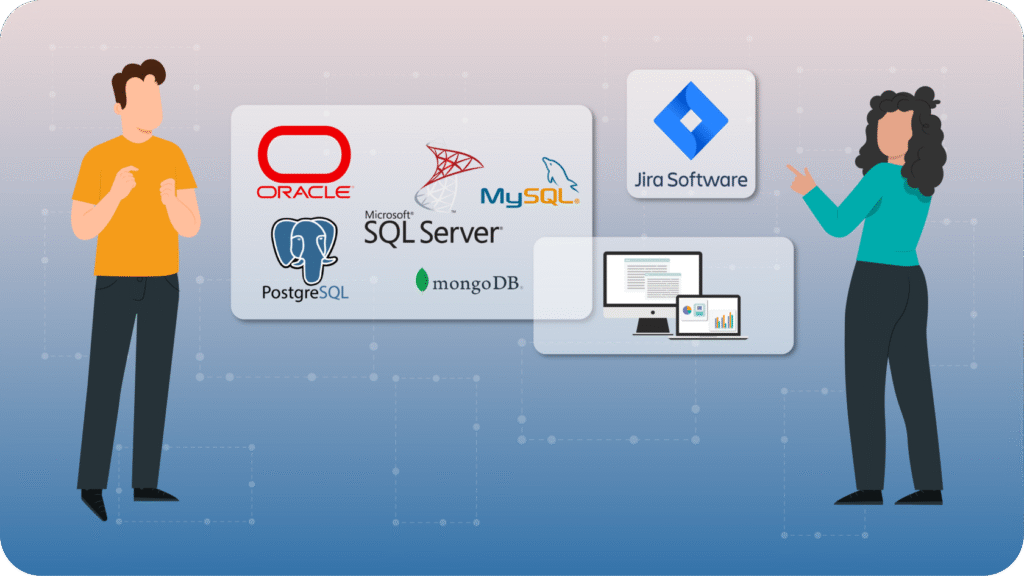
Once you understand the type of database that suits your project, you can evaluate individual options based on performance, community support, ease of use, and ecosystem compatibility.
Here are a few widely used options:
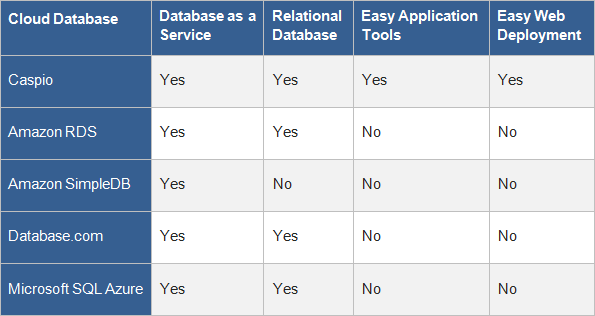
If you’re looking to minimize infrastructure management and operational overhead, Software-as-a-Service (SaaS) database platforms can be a great choice. Here are some popular options:
Firebase
A Google-backed platform offering backend services for web and mobile apps. It includes a real-time database and Cloud Firestore for flexible document storage and real-time syncing, along with hosting, authentication, and analytics support.
MongoDB Atlas
A fully managed cloud version of MongoDB that supports easy deployment across AWS, Azure, and GCP. It offers built-in monitoring, backup, security features, and performance tuning tools.
Amazon RDS
A managed relational database service from AWS that supports MySQL, PostgreSQL, Oracle, SQL Server, and MariaDB. RDS handles tasks like provisioning, backups, patching, and failover, letting you focus on your application.
Even with strong contenders, hands-on testing is essential. Simulate your production environment to evaluate:
Use load testing tools and monitoring dashboards to gain deeper insight into how each database behaves under pressure.
After testing, compare your findings against your initial requirements. Consider not only technical performance but also long-term factors such as:
Keep in mind that your project may benefit from using multiple databases for different tasks—a practice known as polyglot persistence.
Whether you're exploring new tech stacks, refining your development workflow, or looking for real-world project insights, our newsletter keeps you in the loop.