




DEVOPS

DevOps Engineering Explained: From CI/CD to Containers

Join our Community to stay ahead with Insights straight to your Inbox Subscribe for The Latest Tips and Insights straight to your Inbox !

Learning Articles :

DevOps has become one of the most in-demand skills in modern software development. It helps teams build, test, and deploy applications faster while maintaining high quality and reliability.

In this guide, you’ll learn the core pillars of DevOps, including CI/CD, containers, deployment strategies, monitoring, and more—explained in a simple, practical way.


What is DevOps? 

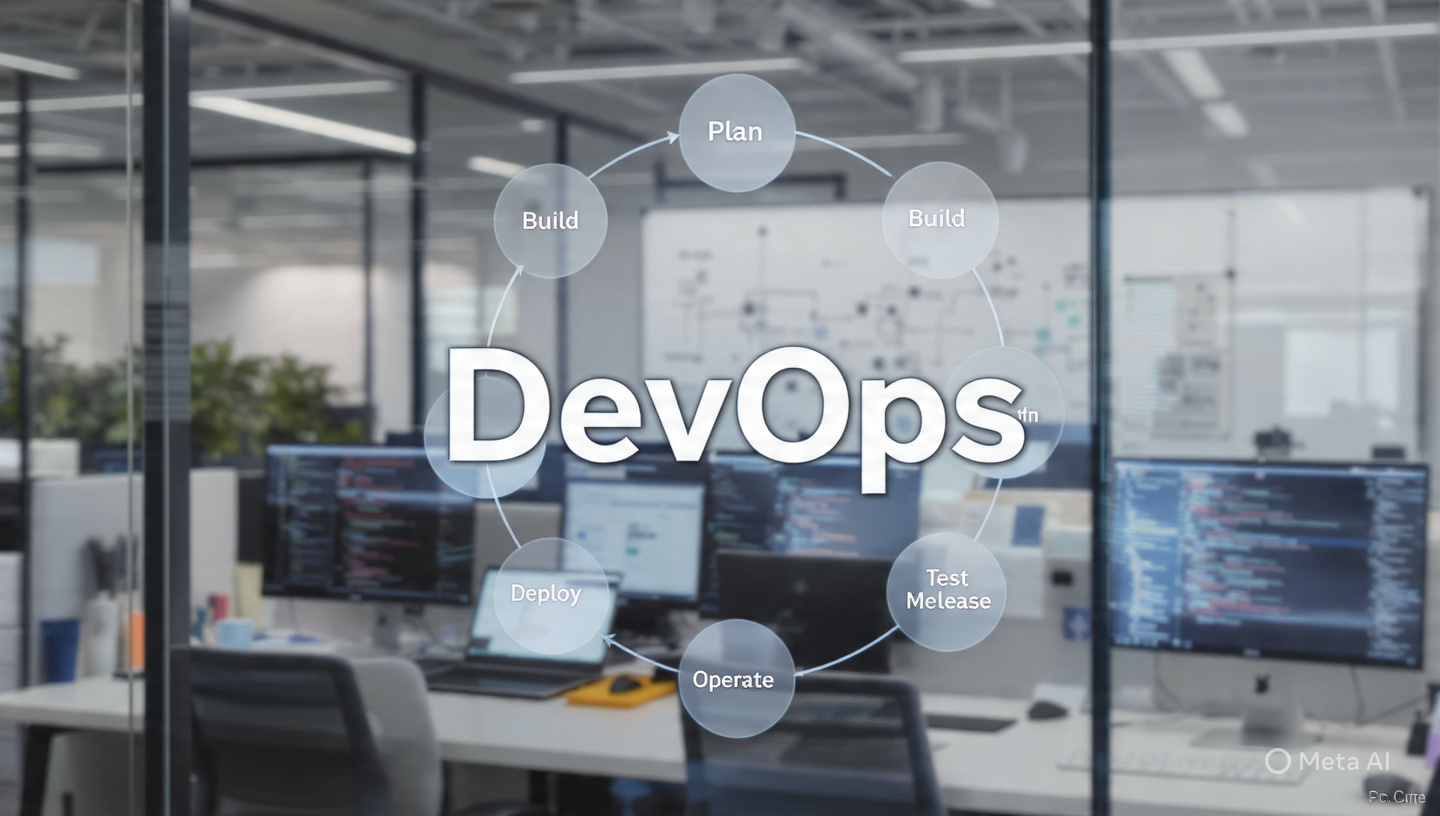
DevOps is a combination of development (Dev) and operations (Ops).

It focuses on:

  • Automation
  • Continuous delivery
  • Faster feedback cycles
  • Better collaboration

The ultimate goal is simple: release better software, faster and more reliably.

1. Pull Request Automation (Code Collaboration at Scale)

Pull Requests (PRs) are how developers share and review code before merging.

Popular tools include:

  • GitHub

  • GitLab

  • Bitbucket

Why PR Automation Matters
  • Ensures code quality

  • Enables team collaboration

  • Reduces bugs in production


# clone repo
git clone https://github.com/user/project.git

# create branch
git checkout -b feature/login

# make changes
git add .
git commit -m “Added login feature”

# push code
git push origin feature/login

What You Can Automate
  • Code checks (linting, formatting)

  • Security scans

  • Automated tests

  • Temporary test environments

👉 Best practice: Merge pull requests within 24 hours to maintain speed.

2. Continuous Integration (CI): The Foundation of DevOps

Continuous Integration (CI) means developers push small, frequent changes, and every change is automatically tested.

Benefits of CI

  • Detect bugs early

  • Prevent broken builds

  • Improve collaboration

  • Increase user satisfaction

👉 CI is the first step toward full DevOps automation.

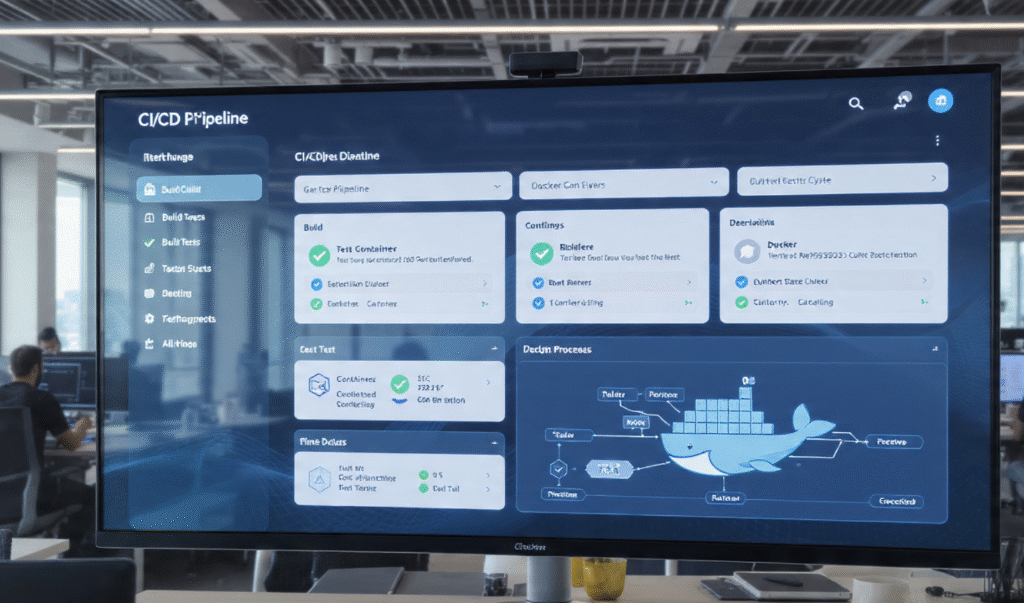
3. Deployment Automation (CI/CD in Action)

Deployment automation ensures that applications are released quickly and safely.

Key Features

  • Automatic deployments

  • Rolling updates

  • Instant rollback

Why It Matters

  • Reduces human error

  • Speeds up releases

  • Keeps systems stable


Simple Deployment Script

#!/bin/bash

echo “Pull latest code”
git pull origin main

echo “Install dependencies”
npm install

echo “Restart server”
pm2 restart app

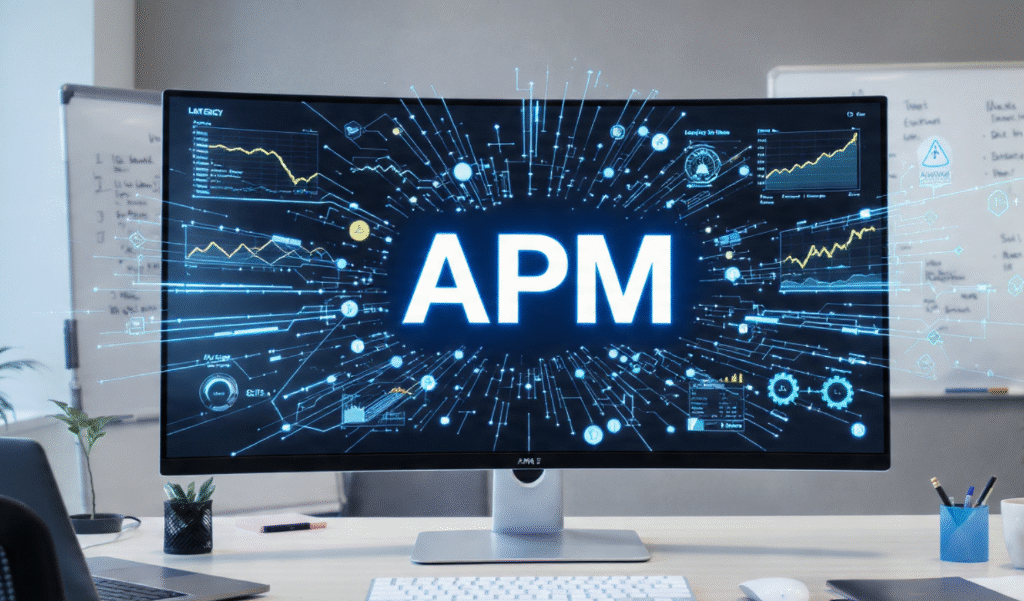
4. Application Performance Monitoring (APM)

Once your application is live, monitoring becomes critical.

Core Components

  • Metrics (CPU, memory, response time)

  • Logging (system events)

  • Monitoring (health tracking)

  • Alerting (issue notifications)

Goal

Detect and fix issues before users are affected.

Join our Community to stay ahead with Insights straight to your Inbox Subscribe for The Latest Tips and Insights straight to your Inbox !

5. Containers vs Virtual Machines (VMs)

Virtual Machines

  • Run a full operating system

  • Strong isolation

  • Slower and resource-heavy

Containers

Tools like Docker make containers lightweight and fast.

How Containers Work ?

Containers use Linux namespaces to isolate resources.

Each container has its own:

  • File system

  • Network ports

  • Processes

👉 Even though multiple containers run on the same OS, they behave like separate systems.

Key Difference

  • VM = Full machine

  • Container = Lightweight isolated environment

 SSH Keys for Secure Access (Very Important 🔐)

Instead of passwords, DevOps uses SSH keys.

Generate SSH Key

ssh-keygen -t rsa -b 4096 -C "your_email@example.com"
 
Add Key to Server
ssh-copy-id user@your-server-ip
 

Connect to Server

ssh user@your-server-ip
 

👉 Used in deployments, CI/CD pipelines, and cloud access.

6. Deployment Strategies (Safe Release Techniques)
Rolling Deployment
  • Update servers gradually
  • No downtime
  • Easy rollback
Blue-Green Deployment
  • Two environments (old + new)

  • Switch traffic instantly

  • Very safe

Canary Deployment
  • Release to a small % of users

  • Monitor feedback

  • Reduce risk

7. Serverless vs Autoscaling
  • Autoscaling → Adds more servers during high traffic

  • Serverless → Runs code only when triggered

👉 Serverless is faster and event-driven
👉 Autoscaling works over longer periods


8. Service Discovery in DevOps

In distributed systems, services need to communicate.

Example:

  • Database → 10.1.1.1:5432

  • Backend → 10.1.1.2:8080

Service discovery helps systems connect without hardcoding IP addresses.

9. Zero Downtime Deployment

Zero downtime means updating your app without interrupting users.

Steps

  1. Deploy new version
  2. Wait until it’s stable
  3. Redirect traffic
  4. Shut down old version

👉 Users never experience downtime.

Join our Community to stay ahead with Insights straight to your Inbox Subscribe for The Latest Tips and Insights straight to your Inbox !

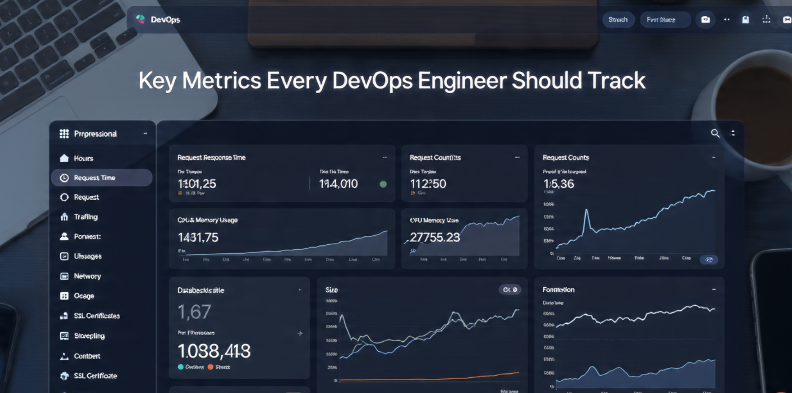
Key Metrics Every DevOps Engineer Should Track
  • Request response time

  • Request count (traffic)

  • CPU & memory usage

  • Database size

  • Network throughput

  • SSL certificate expiry

Virtual Machines vs Containers: From Basics to Advanced (Complete Guide)

1. The Basic Idea

When you run a program directly on your system:

  • It uses your OS
  • It shares system resources with other apps

This can cause problems like:

  • Dependency conflicts
  • Version mismatches
  • System crashes

👉 Solution: Isolation

That’s where VMs and containers come in.

VM Architecture

Hardware

Hypervisor

VM (OS + App)
VM (OS + App)

Pros of VMs

  • Strong isolation

  • Run different operating systems

  • Secure for untrusted workloads

Cons

  • Heavy (full OS per VM)

  • Slower startup

  • More memory & storage usage

Container Architecture
Hardware

Host OS

Container Engine (Docker)

Container (App + dependencies)

Pros of Containers

  • Very fast startup

  • Lightweight

  • Easy to scale

  • Portable

Cons

  • Less isolation than VMs

  • Depend on host OS

  • Security needs proper configuration

Advanced Concepts (Important for DevOps)
Namespaces (Container Isolation)

Namespaces isolate:

  • Processes

  • Network

  • File system

  • Users

👉 Each container sees its own world.

 cgroups (Resource Control)

Control:

  • CPU usage

  • Memory limits

  • Disk I/O

👉 Prevents one container from taking all resources.

Hypervisor (VM Core)

A hypervisor:

  • Creates fake hardware

  • Manages multiple VMs

👉 It can “pretend”:

  • Disk size

  • RAM

  • CPU cores

Containers Inside VMs (Real World Setup)

In production:

  • Containers often run inside VMs

Why?

  • Combine VM security + container speed

In conclusion, DevOps is more than just a methodology—it is a culture that brings development and operations together to create faster, more reliable, and efficient software delivery. By embracing automation, continuous integration, continuous deployment, monitoring, and collaboration, organizations can improve productivity and deliver better value to users. As technology continues to evolve, DevOps remains a key pillar for innovation, helping teams adapt quickly, reduce risks, and build high-quality solutions in today’s fast-paced digital world.

REASL-WORLD-ASSETS

RWA?

Subscribe for The Latest Tips and Insights straight to your Inbox !

Join our community to stay ahead with insights straight to your Inbox !

Learning Articles

Real world Assets Tokenization

Learn how real estate tokenization enhances liquidity , security , and efficiency , reshaping investment accessibility and market Trends .

 

Real estate has always been one of the most trusted ways to build wealth. But let’s be honest—it’s not easy to get into. Buying property usually requires a huge amount of money upfront, which automatically puts it out of reach for most people. On top of that, access to good deals often depends on location, connections, or insider knowledge. For many potential investors, the barriers are just too high. Then there’s the issue of liquidity. Unlike stocks or crypto, you can’t just sell a property overnight. It can take weeks, months, or even years to find a buyer. During that time, your money is stuck. And let’s not forget the costs. Brokers, agents, legal fees—it all adds up, making the process slower and more expensive than it needs to be. This is where blockchain technology is starting to change things.

With platforms like Ethereum enabling tokenization, real estate can now be broken down into digital shares. Instead of buying an entire property, you can own a small fraction of it—just like owning shares in a company.

This approach has the potential to make real estate more accessible, more liquid, and far more efficient. And that’s why real estate tokenization is quickly gaining attention as a smarter way to invest in property.

 

What does real estate tokenization means ?

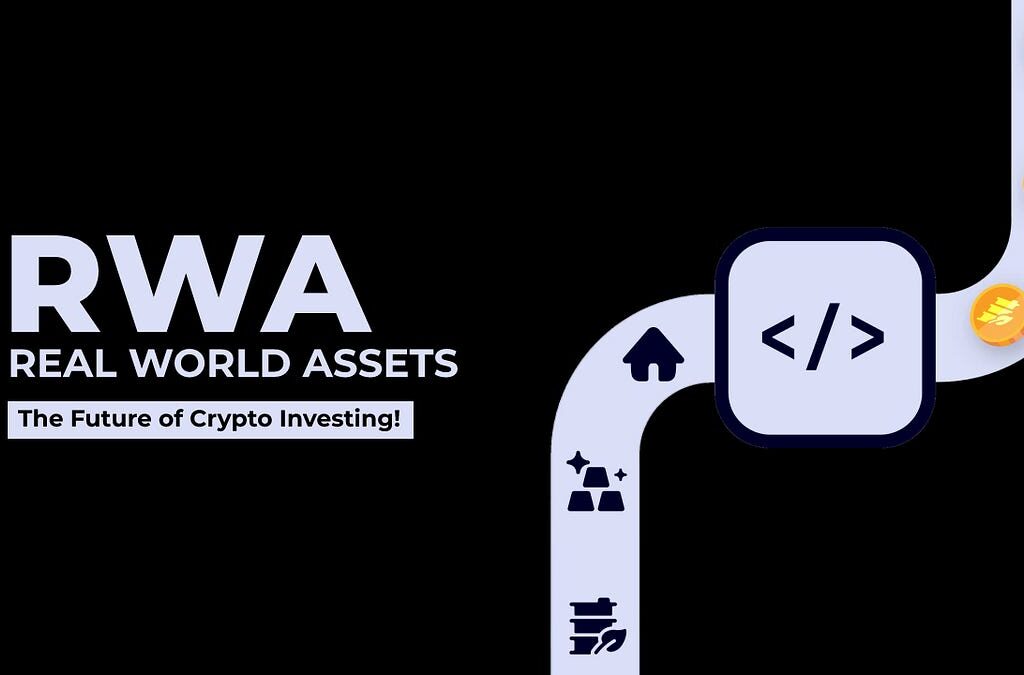
Real estate tokenization is simply the process of converting property ownership into digital tokens on a blockchain like Ethereum. Instead of buying an entire property, investors can purchase small fractions of it through these tokens, each representing ownership or a share of the income the property generates. Unlike traditional REITs, which involve investing in a fund, tokenization allows more direct exposure to specific properties—making real estate investment more accessible, flexible, and easier to trade.

How does tokenization works ?

It might sound technical, but the process is pretty straightforward when you break it down.

  1. First, a property is selected—this could be anything from an apartment to a hotel or even a group of commercial buildings. Its value is carefully assessed based on factors like location, market demand, and potential income.

2. Next, a legal structure is set up to define what investors actually own. This step is important because it connects the digital tokens to real-world ownership or income rights, making everything compliant and secure.

3. After that, smart contracts (basically self-executing code on blockchain platforms like Ethereum) are created. These handle things automatically—like distributing rental income or setting rules for buying and selling tokens.

4. Once everything is ready, the property is divided into digital tokens. Each token represents a small share of the asset. These tokens are then offered to investors through online platforms, where people can buy them just like they would buy stocks.

Finally, after the sale, everything runs more smoothly. Ownership records are transparent, transactions are faster, and investors can even trade their shares if a marketplace is available. Meanwhile, any income generated—like rent—can be distributed automatically.

Here’s a detailed breakdown of how it works 

Step 1. Asset identification and valuation. The tokenization process begins by identifying the property to be tokenized. This could be a residential building, a commercial property, or even a collection of assets like hotels or warehouses. The asset’s value is determined through appraisal, taking into account factors like location, market trends, and revenue potential.

Step 2. Structuring ownership. A legal framework is established to align ownership rights with the tokens. This ensures compliance with local regulations and defines how token holders will benefit. For example, tokens could grant ownership rights or represent revenue-sharing agreements.

Step 3. Smart contract development. Smart contracts are created so that the computer coding describes and automates the token’s functionality. These contracts define terms such as dividend payments, transfer rules, and voting rights for token holders. For instance, a smart contract could automatically distribute rental income to token holders on a monthly basis.

Step 4. Token issuance. Digital tokens are minted on a blockchain platform, each representing a share in the property. Platforms like Propy and Maticz facilitate this stage, providing tools to issue tokens, link them to the property, and manage sales.

Step 5. Marketplace listing and sale. Tokens are listed on blockchain marketplaces or through private sales. Investors purchase tokens, gaining a stake in the property without the need for traditional real estate transactions. This democratizes investment and enables global participation.

Step 6. Ongoing management. Once tokens are sold, the property’s operations are managed transparently through blockchain. Token holders can trade their shares on secondary markets, and smart contracts ensure seamless transactions and revenue sharing.

The asset tokenization process transforms the real estate market by creating a streamlined and secure way to buy, sell, and manage property shares. From beachfront villas to urban office buildings, tokenization opens the door to a more inclusive and efficient real estate ecosystem, driven by automation and transparency.

Subscribe for The Latest Tips and Insights straight to your Inbox !

Join our community to stay ahead with insights straight to your Inbox !

The Benefits of tokenizing real estate

The rise of real estate tokenization is driven by several strong advantages that make investing simpler, faster, and more accessible.

Liquidity

Real estate has always been a slow-moving asset. Selling a property can take months or even years. Tokenization changes this by breaking properties into smaller, tradable units. Instead of selling an entire property, investors can sell just a portion of their holdings, making it much easier to access cash when needed.

Investor Accessibility

One of the biggest barriers in real estate is the high cost of entry. Tokenization removes this hurdle by enabling fractional ownership. Investors can now buy small shares of a property instead of committing large amounts of money, allowing more people from different financial backgrounds to participate.

Security

Blockchain technology adds a strong layer of security. Ownership records are stored in a way that is encrypted and difficult to tamper with. Smart contracts further enhance this by automating transactions and income distribution, reducing the chances of fraud or human error.

Transparency

Every transaction is recorded on a public ledger, making the entire process more transparent. Investors can easily track ownership, transactions, and income flows, reducing hidden costs and building trust.

Immutability

Once information is recorded on the blockchain, it cannot be changed. This ensures that ownership records remain accurate and reliable over time, helping prevent disputes and increasing confidence among investors.

Increased Efficiency

Traditional real estate transactions involve multiple intermediaries and can take a long time to complete. Tokenization simplifies this process by automating key steps through smart contracts. This reduces both time and costs, while also making property management—like distributing rental income—much smoother.

Financial Gains

Tokenization creates new financial opportunities for both property owners and investors. Owners can access a global pool of investors, which may increase demand and property value. At the same time, investors can earn income through rent or profits, and even benefit from selling their tokens in secondary markets.


Overall, tokenization is transforming real estate into a more flexible, efficient, and inclusive investment option.

Key Aspects of Real Estate Tokenization


Real estate tokenization is transforming how people invest in property by combining blockchain technology with traditional assets. It introduces new ways to own, manage, and earn from real estate.

• Fractional Ownership in Real Estate:

One of the biggest advantages of real estate tokenization is fractional ownership. Properties are divided into small digital tokens, allowing investors to buy shares with lower capital and diversify their investments.

• Blockchain Technology in Real Estate:

Tokenized properties are secured on blockchain networks like Ethereum and Polygon. This ensures transparent, secure, and tamper-proof ownership records.

• Types of Real Estate Tokens:

Tokenized real estate can include fungible tokens (representing fractional ownership) and non-fungible tokens (NFTs) that may represent full ownership of a specific property.

• Automated Rental Income Distribution:

Smart contracts enable automatic distribution of rental income to investors, making property management more efficient and reducing manual processes.


Benefits of Real Estate Tokenization

 The benefits of tokenized real estate investment are driving its rapid adoption across global markets.

• Increased Liquidity in Real Estate:

Investors can easily buy and sell property shares on secondary markets, unlike traditional real estate, which takes months to liquidate.

• Lower Transaction Costs:

Blockchain reduces the need for intermediaries like brokers and agents, significantly lowering transaction fees.

• Global Real Estate Investment Access:

Tokenization allows investors to access international property markets without geographical restrictions, opening up new opportunities worldwide.


 Challenges of Real Estate Tokenization


Despite its advantages, real estate tokenization still faces some challenges.

• Regulatory Uncertainty:

The legal framework for tokenized assets is still evolving across countries, requiring compliance with local laws and securities regulations.

• Physical Asset Risks:

Since the asset exists in the real world, risks like property damage, legal disputes, and ownership linkage remain.

• Adoption Barriers:

Widespread adoption depends on how quickly blockchain technology is accepted in traditional finance systems.

Real Estate Tokenization Market Growth

The real estate tokenization market is growing rapidly. Industry estimates suggest it could expand from around $120 billion in 2023 to over $3 trillion by 2030, highlighting its massive potential. Regulatory bodies like the International Financial Services Centres Authority are already exploring frameworks for tokenized assets, signaling strong future growth in this sector.

Subscribe for The Latest Tips and Insights straight to your Inbox !

Join our community to stay ahead with insights straight to your Inbox !

Real estate tokenization is still in its early stages, but it’s already showing strong potential to reshape how property investment works. Of course, challenges like evolving regulations, technology adoption, and trust among stakeholders still need to be addressed. Solving these will be key to unlocking its full potential.

As the space continues to grow, communities like Hacksprint and Smart Chain Society are playing an important role by working with emerging platforms to drive awareness, education, and real-world implementation of tokenization. By simplifying complex concepts and building practical solutions, they are helping bridge the gap between traditional real estate and blockchain technology.

The future of real estate lies in making investment more accessible, efficient, and transparent—and tokenization is a big step in that direction. As more developers, investors, and institutions come on board, we’re likely to see rapid innovation in how real-world assets are owned and traded.

Machine-Learning

The Roadmap to Mastering Machine Learning in 2025

Machine Learning (ML) is no longer just a buzzword—it’s a part of our everyday lives. From the voice assistants in our pockets to advanced robots performing human-like tasks, ML is transforming industries worldwide. In healthcare, it’s helping doctors diagnose diseases faster. In the automobile sector, it’s powering self-driving cars. In retail, it’s delivering personalized recommendations and automating inventory systems. And that’s just scratching the surface.

The global machine learning market, valued at $14.91 billion in 2021, is projected to skyrocket to $302.62 billion by 2030—growing at an impressive 38.1% CAGR. This explosive growth makes ML one of the most in-demand skills to learn by 2025.

Whether you’re starting from scratch or aiming to advance your career in ML, this roadmap will guide you step-by-step through the skills, tools, and concepts you need to master in 2025.

Stay informed with our latest tips, guides, and updates via email.

Join our mailing list for expert tips, practical how-tos, and the latest industry trends—no fluff, just value. Stay sharp and ahead in tech.

What is Machine Learning?

Think about how you learn any skill—you gather knowledge from different sources, practice repeatedly, and gain experience. This process shapes human intelligence. Machine Learning (ML) works in a similar way: we feed data to a computer, and it learns from that data to improve its performance over time.

Unlike traditional programming, where every step is explicitly coded, ML enables computers to make decisions by recognizing patterns in data. For example, instead of writing rules to identify a cat, we show the system thousands of cat images. Over time, it learns the key features of a cat and applies this knowledge to recognize new images. The more data it processes, the better it gets—just like humans improve with practice.

Now, let’s dive into how you can begin your Machine Learning journey in 2025.

Step-by-Step Roadmap to Master Machine Learning

Step 1: Prerequisites

First, you need to learn some concepts of mathematics and programming before moving on to machine learning.

Learn Mathematics

Linear Algebra

Linear Algebra is the backbone of many Machine Learning algorithms. It deals with vectors, matrices, and the operations that can be performed on them. These concepts are essential for understanding how data is represented, transformed, and processed in ML models.

  • Scalars, Vectors, and Matrices – understanding data representation.
  • Matrix Operations – addition, subtraction, multiplication, transposition, and inversion.
  • Dot Product & Cross Product – essential for understanding geometric interpretations in ML.
  • Matrix Factorization – LU decomposition, QR decomposition.
  • Eigenvalues & Eigenvectors – vital for dimensionality reduction (e.g., PCA).
  • Singular Value Decomposition (SVD) – used in recommender systems, noise reduction, and image compression.
  • Orthogonality & Orthonormality – key in optimization and numerical stability.
  • Vector Spaces & Subspaces – understanding the structure of data transformations.
  • Projections – important for algorithms like least squares regression.
  • Norms & Distance Metrics – for measuring similarity or error in data.

Calculus

Calculus is essential in machine learning because it helps us understand how models learn by optimizing their parameters. In ML, calculus powers algorithms that minimize errors and improve accuracy through optimization.

  • Limits & Continuity – foundational concepts for understanding derivatives.
  • Derivatives & Partial Derivatives – measuring the rate of change of functions.
  • Chain Rule – essential for backpropagation in neural networks.
  • Gradients & Gradient Vectors – direction of steepest ascent/descent in optimization.
  • Gradient Descent – the core optimization algorithm in ML.
  • Hessian Matrix – for second-order optimization methods.
  • Jacobian Matrix – used in transformations and deep learning layers.
  • Optimization Techniques – SGD, Mini-batch Gradient Descent, Adam, RMSprop, Momentum.
  • Maxima & Minima – finding optimal model parameters.
  • Learning Rate Schedules – controlling convergence speed and stability.
  • Taylor Series – approximating functions for faster computation in ML models.

Probability & Statistics for Machine Learning

A collection of white dice with red and blue dots arranged on a pink surface.
  • Basics of Probability
  • Sample space, events, and probability axioms
  • Conditional probability and independence
  • Law of Total Probability
  • Bayes’ theorem and its role in ML
  • Probability Distributions
  • Discrete distributions: Bernoulli, Binomial, Poisson
  • Continuous distributions: Uniform, Normal, Exponential, Gamma
  • Joint, marginal, and conditional distributions
  • Multivariate Gaussian distribution
  • Central Limit Theorem and its importance in ML
  • Descriptive Statistics
  • Mean, median, mode
  • Variance, standard deviation, range
  • Skewness and kurtosis
  • Correlation vs. causation
  • Inferential Statistics
  • Sampling methods and biases
  • Confidence intervals
  • Hypothesis testing (null and alternative hypotheses)
  • Z-test, T-test, Chi-square test, ANOVA
  • P-values and statistical significance .
  • Statistical Modeling in Machine Learning
  • Maximum likelihood estimation (MLE)
  • Maximum a posteriori estimation (MAP)
  • Expectation-Maximization algorithm
  • Likelihood ratios
  • Overfitting, underfitting, and bias-variance tradeoff
  • Probability in ML Algorithms
  • Naïve Bayes classifier
  • Logistic regression and probability interpretation
  • Probabilistic graphical models (Bayesian networks, Markov random fields)
  • Hidden Markov models (HMM)
  • Gaussian mixture models (GMM)
  • Uncertainty & Decision Making
  • Entropy and information gain
  • Cross-entropy loss in classification
  • Bayesian inference in ML
  • Monte Carlo methods
Learn Programming
  • Python (Recommended): Python is the most popular programming language for machine learning. These resources can help you learn Python:
  • Youtube
  • Github

Stay informed with our latest tips, guides, and updates via email.

Join our mailing list for expert tips, practical how-tos, and the latest industry trends—no fluff, just value. Stay sharp and ahead in tech.

Understand Key Concepts of Machine Learning

Once you have a solid foundation in mathematics and programming, you’re ready to step into the world of Machine Learning (ML). At its core, ML is about teaching computers to learn from data and make predictions or decisions without being explicitly programmed.

Machine Learning can be broadly divided into three main types:

1. Supervised Learning

Supervised learning uses labeled datasets to train algorithms, enabling them to identify patterns and make accurate predictions.
Key algorithms to explore:

  • Linear Regression
  • Logistic Regression
  • Support Vector Machines (SVM)
  • k-Nearest Neighbors (KNN)
  • Decision Trees

2. Unsupervised Learning

Unsupervised learning works with unlabeled data, uncovering hidden patterns, relationships, or groupings without predefined outputs.
Key algorithms to explore:

  • Principal Component Analysis (PCA)
  • k-Means Clustering
  • Hierarchical Clustering
  • DBSCAN

3. Reinforcement Learning

In reinforcement learning, an agent learns to make decisions by interacting with an environment, receiving rewards or penalties for its actions. While it’s an exciting field, beginners can skip diving deep into it initially and focus on supervised and unsupervised learning first.

Understand Key Concepts of Deep Learning

Once you’ve mastered the core concepts of Machine Learning, the next step is to dive into Deep Learning.

What is Deep Learning?
Deep Learning is a specialized branch of Machine Learning that uses multi-layered artificial neural networks to solve complex problems. By mimicking the way the human brain processes information, deep learning models can handle tasks such as image recognition, natural language processing, and speech recognition with remarkable accuracy.

With its ability to automatically extract features from raw data, deep learning has become the driving force behind modern AI breakthroughs.

Focus on the framework that interests you most, PyTorch or TensorFlow. Start by learning one and you can explore the other one later if needed for a project. Some of the resources are:

Pytorch Github

Tensorflow Github

Stay informed with our latest tips, guides, and updates via email.

Join our mailing list for expert tips, practical how-tos, and the latest industry trends—no fluff, just value. Stay sharp and ahead in tech.

This guide provides a clear roadmap to learning and mastering ML by 2025. If you’re eager to learn, just remember: the most important step is to begin. Take it one step at a time, and you’ll make steady progress. If you have any questions or need extra help along the way, feel free to leave a comment — I’m here to assist you on your journey!

pexels-padrinan-2882570

How to Select the Right Database for Your Project ?

Stay informed with our latest tips, guides, and updates via email.

Join our mailing list for expert tips, practical how-tos, and the latest industry trends—no fluff, just value. Stay sharp and ahead in tech.

Choosing the right database is one of the most important decisions in any software project. With a wide range of options available—each offering distinct architectures, features, and performance trade-offs—the selection process can feel overwhelming. But by taking a structured and informed approach, you can confidently choose the right solution for your specific needs.


Define Your Project Requirements

Every project has unique data needs. Before diving into specific database options, it’s essential to understand:

  • What type of data are you storing—structured, semi-structured, or unstructured?
  • How large is the data volume, and how fast is it expected to grow?
  • What kind of operations will you run—are they mostly reads, writes, or complex queries?
  • Do you prioritize consistency, availability, or partition tolerance?
  • Will the system handle real-time data or operate in batches?

A clear definition of your requirements will help narrow down your options early.


Understand the Different Types of Databases

There are three primary categories of databases:

Relational Databases (SQL)
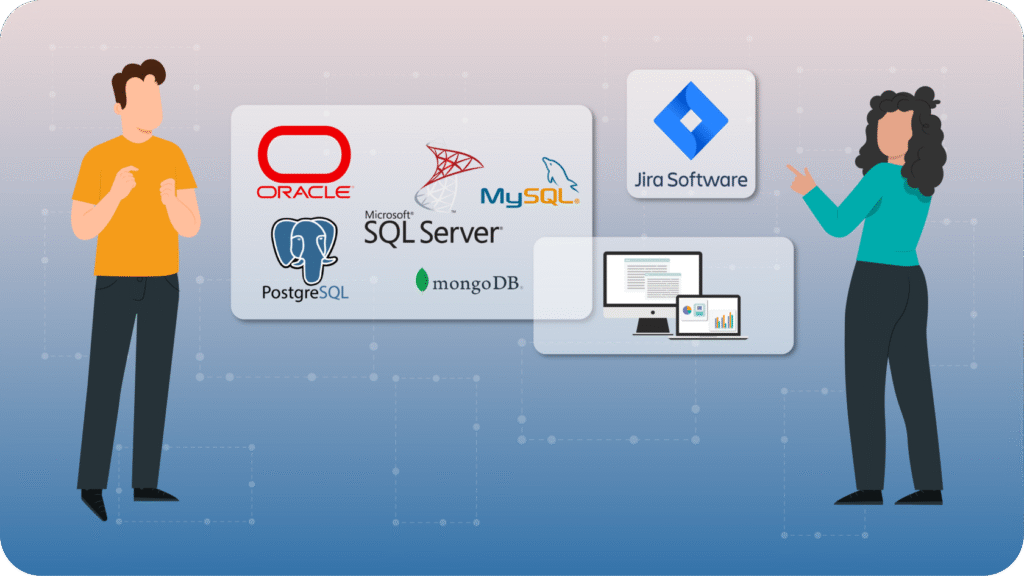
These use structured schemas and store data in tables. They’re ideal for applications requiring complex queries, strong consistency, and transactional integrity. Examples include MySQL, PostgreSQL, Oracle, and SQL Server.

Non-Relational Databases (NoSQL)
These databases store data in more flexible formats such as documents, key-value pairs, or graphs. They’re great for scalability and handling unstructured or rapidly changing data. Examples include MongoDB, Redis, Cassandra, and Neo4j.

Hybrid Databases
Some modern databases offer hybrid models that blend the features of SQL and NoSQL databases, giving developers the flexibility to work with different data types and access patterns in one platform.
 

Compare Popular Database Solutions

Once you understand the type of database that suits your project, you can evaluate individual options based on performance, community support, ease of use, and ecosystem compatibility.

Here are a few widely used options:
  • PostgreSQL – An open-source relational database known for its powerful SQL engine, extensibility, and strong data integrity features.
  • MySQL – A lightweight and easy-to-use relational database popular in web development.
  • MongoDB – A document-based NoSQL database great for flexible schemas and JSON-like data storage.
  • Redis – A high-speed in-memory key-value store often used for caching and real-time analytics.
  • Neo4j – A leading graph database ideal for storing and querying complex relationships.
  • Cassandra – A distributed database built for handling large-scale data across many servers with high availability.
  • DynamoDB – AWS’s fully managed NoSQL solution with seamless scalability and low-latency performance.

Consider SaaS-Based Database Platforms

If you’re looking to minimize infrastructure management and operational overhead, Software-as-a-Service (SaaS) database platforms can be a great choice. Here are some popular options:

Firebase
A Google-backed platform offering backend services for web and mobile apps. It includes a real-time database and Cloud Firestore for flexible document storage and real-time syncing, along with hosting, authentication, and analytics support.

MongoDB Atlas
A fully managed cloud version of MongoDB that supports easy deployment across AWS, Azure, and GCP. It offers built-in monitoring, backup, security features, and performance tuning tools.

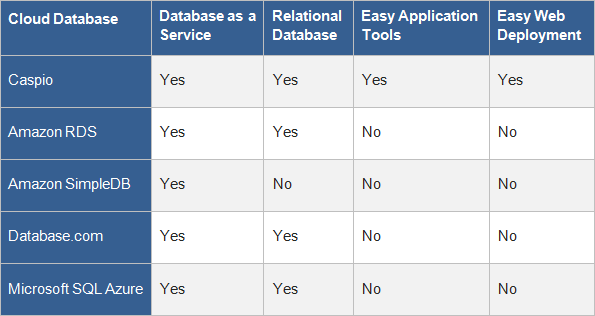
Amazon RDS
A managed relational database service from AWS that supports MySQL, PostgreSQL, Oracle, SQL Server, and MariaDB. RDS handles tasks like provisioning, backups, patching, and failover, letting you focus on your application.


Test Before You Commit

Even with strong contenders, hands-on testing is essential. Simulate your production environment to evaluate:

  • Performance under expected workloads
  • Read and write latency
  • Query handling and indexing
  • Integration with your technology stack
  • Backup and recovery processes

Use load testing tools and monitoring dashboards to gain deeper insight into how each database behaves under pressure.


Make a Confident Decision

After testing, compare your findings against your initial requirements. Consider not only technical performance but also long-term factors such as:

  • Licensing and operating costs
  • Community and support availability
  • Learning curve and developer productivity
  • Vendor lock-in and cloud compatibility

Keep in mind that your project may benefit from using multiple databases for different tasks—a practice known as polyglot persistence.

Stay informed with our latest tips, guides, and updates via email.

Join our mailing list for expert tips, practical how-tos, and the latest industry trends—no fluff, just value. Stay sharp and ahead in tech.